
IFS Therapist Serving Palo Alto, CA
For professionals who have it together on the outside and are exhausted on the inside
You Hold It Together at Work and Fall Apart After
The workday ends and everything in you that was still holding up switches off at once. You made it through every call today, every version of yourself other people needed. Getting yourself dinner still feels like a project, and even a text from someone you like sits unanswered because you can't face writing back tonight. Keeping work looking fine takes everything you have, and there's nothing left for what comes after.
Last week you snapped at someone over nothing. It's not the first time lately. Every time it happens you end up over-apologizing, running through it in your head for days after everyone else has moved on. The people close to you have heard some version of this before, more than once, and you can feel them running out of patience even when nobody says so. You don't want to be one more thing they have to manage.
You've thought about finding a therapist before. The idea doesn't scare you. The vetting does, guessing at fit from a photo and a paragraph, wondering if this one will take the weight of it seriously or nod along. At some point you're tempted to pick someone at random to be done deciding.
An IFS Therapist Serving Palo Alto
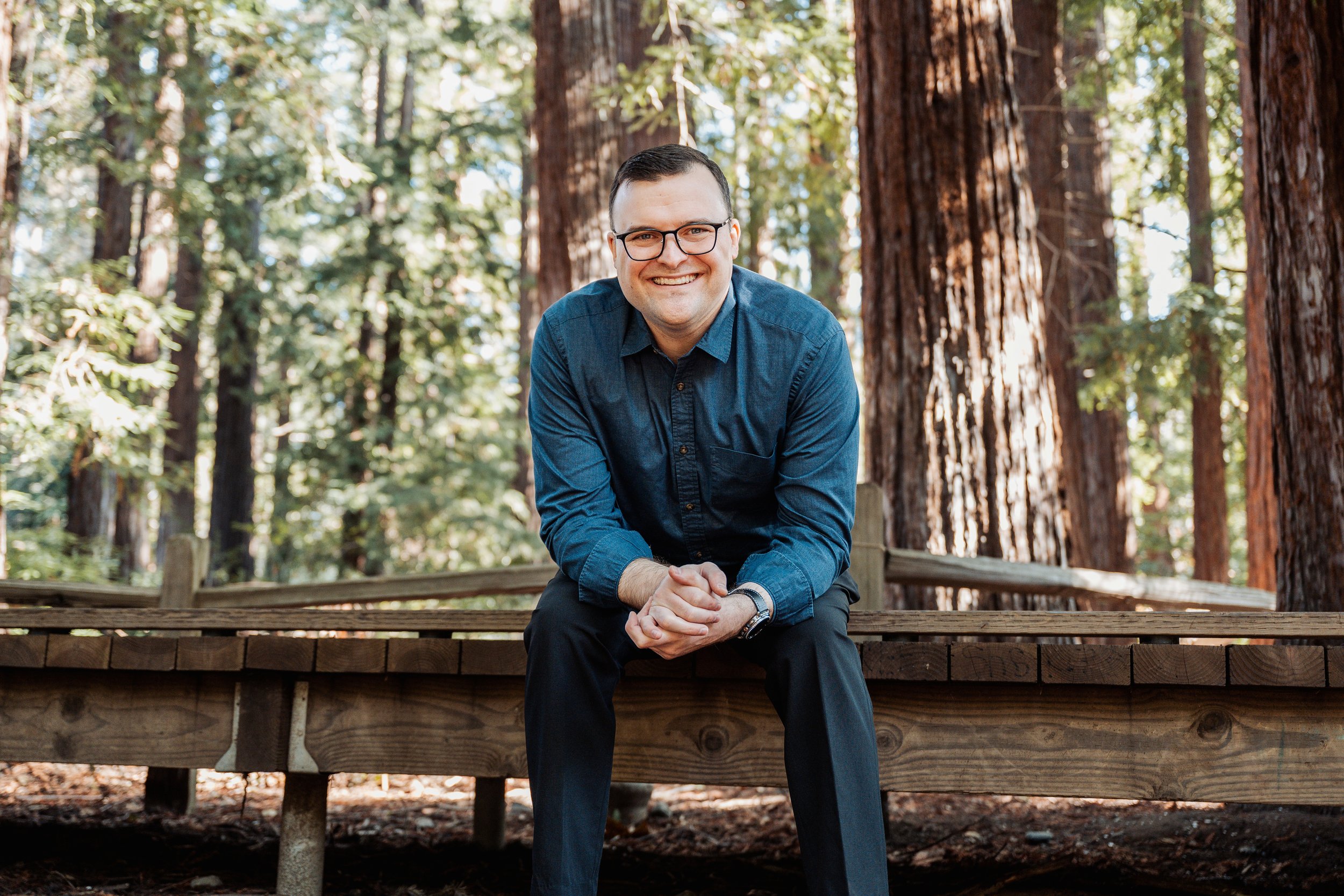
I'm Ryan Thurwachter, LCSW. My office is in Menlo Park, minutes from Palo Alto by car. I also see clients virtually throughout California. I'm a Level 2 IFS therapist through the IFS Institute, trained beyond the foundational protocol to work with the more resistant and complex parts of a person's system.
I use Internal Family Systems therapy, which treats perfectionism and the inner critic that won't let up as parts of you that developed for reasons. In session, that looks like talking directly to one of those parts, understanding what it's protecting you from, before helping it feel safe enough to ease up. IFS is evidence-based, and the research is collected here. Learn more about IFS therapy and what a session looks like.
One client who'd done a year of CBT before working with me told me it "really wasn't working," and that she couldn't change anything until she "figured out the why." CBT does real work on thoughts and behaviors. For the people who find their way to me, it usually hasn't reached the part generating the pattern.
I work mostly with professionals in tech, finance, and law who've generally done the analytical work on themselves. They usually already have the insight. Nobody has worked with the part of the system that insight doesn't reach.
What the First Few Months Actually Look Like
We start on the real problem in the first session, and something else is going on underneath that. The parts of you that have been managing things for years are deciding whether I can be trusted with what sits below them. Most people want to move faster than those parts do. In IFS we say slow is fast, because the protection around the hurt eases only when it stops being rushed, and that turns out to be the condition healing needs.
If you're already good at therapy, that shows up here too. There's often a part that knows how to give the articulate answer and stay a step ahead of the room, and we work with that part directly rather than talking around it, until it's willing to relax. It's usually protecting something specific, often a belief that you won't be accepted if you're seen without the performance, or that you're not worth much apart from what you produce. Being fluent about yourself doesn't prevent any of this.
It does get harder before it gets easier. When we work close to the pain, things that had been quiet come up. That material was already there and already costing you something. The difference is that it's in the room now where it can be worked with, and as those protective parts watch you handle what used to be too much, they stop bracing against it.
I'd rather be straightforward about the cost of that. When we've moved toward the pain too fast, some clients have had a harder few weeks, shorter with a partner and more anxious at work. I watch for that and slow us down when it shows up.
What I usually see change first is small. People get curious about their own reactions instead of only frustrated by them, and some compassion turns up for why they've been doing the thing they keep doing. That tends to show up well before the pattern itself moves.
That's the shape of it whether you came in for anxiety, burnout, grief, or something you haven't named yet.
Anxiety, Trauma, Burnout, and Grief
These are the four specialties I see most often.
Anxiety
The anxiety that runs alongside strong performance is different from what most people picture. It's been powering your performance for years, which is part of why it's hard to separate yourself from it. The accomplishments are real and the credentials are earned, but some part of you is still convinced it's only a matter of time before the right person sees through it. Learn more on my anxiety therapist page.
Trauma
A lot of the professionals I work with don't think of their history as traumatic, and in some ways they're right. What was difficult was rarely a single event, more often the atmosphere they grew up in, one where emotions were treated as inconveniences and the safest version of you was always the most competent one. Those beliefs are often still running the show, outside of awareness, which is why the work has to go back to where they were formed. Learn more on my trauma therapist page.
Burnout
Sleep stopped touching this kind of exhaustion a long time ago. It's what's left after years of running on the version of you that shows up no matter what, long after that version stopped being sustainable. Cutting back rarely reaches it, because whatever's driving the pace is still running underneath. Learn more on my burnout therapy page.
Grief
Loss that hasn't moved, whether it happened recently or years ago, often got set aside because there was always something more pressing. Grief that stayed stuck like that tends to need more than time. That's especially common for people who didn't feel like they had room to grieve when it happened, and who only come back to it once things finally slow down. Learn more on my grief counseling page.
What Happens If You Reach Out
One client told me, before we'd ever spoken, "Trying to find the right therapist is so stressful. I don't want to go through all this with the wrong person." That's the reason the free consultation exists.
1. A free 15-minute consultation. We talk about what's going on and whether this is worth pursuing further. If it's not a fit, I'll tell you that directly, and it won't have cost you anything but the fifteen minutes.
2. A first session that gets straight to work. We find what pattern, urge, or feeling is causing you the most trouble right now, or what you most want to dive into, and start on it instead of taking an exhaustive history. Your story tends to come out along the way, as it's relevant, not all at once up front.
3. Change you can point to. One client put it this way: "Before I started doing therapy I was burning through people... I have a place in my life I can work through the things in my life that are hurting me without burning through people."
If guessing at fit from a photo and a paragraph is what's been stopping you, I'd like to have a direct conversation about whether this is worth your time.
Practical Information
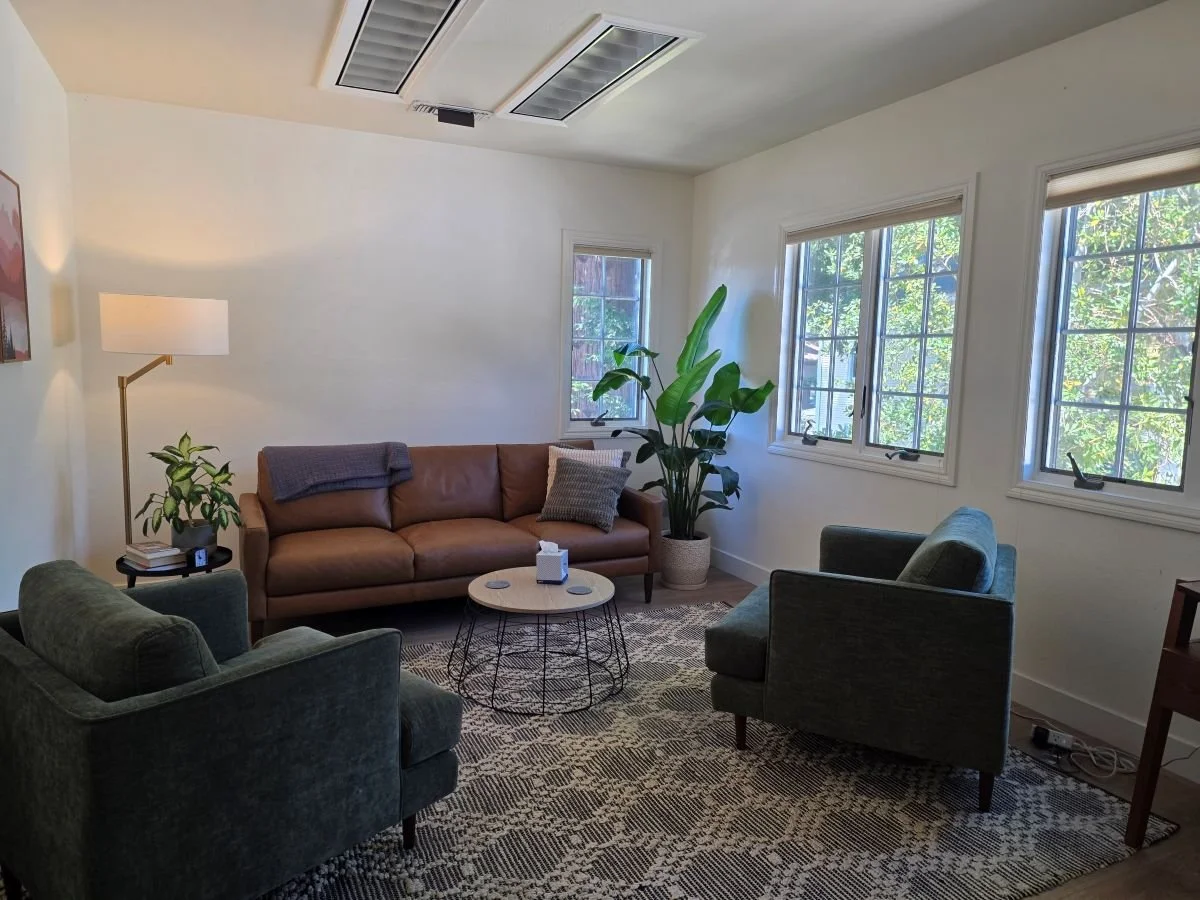
My office is at 120B Santa Margarita Ave, Suite 211, Menlo Park, CA 94025, accessible from Palo Alto, Atherton, Redwood City, and the surrounding Peninsula. For clients throughout California who prefer to meet virtually, I offer the same work over a secure video platform.
Sessions are $250. I don't take insurance directly, but most clients with out-of-network benefits get a meaningful portion of each session reimbursed by their plan. You can check your specific reimbursement rate in under two minutes using the tool on my Fees page, before we even talk. If we decide to work together, I handle the superbill submission for you, so the reimbursement happens without any administrative work on your end.
The initial consultation is 15 minutes by phone, at no charge. It's a direct conversation about what's going on and whether this practice is a reasonable fit.
If you've been putting this off because nothing you've found has felt worth the time, I'd like to have a direct conversation with you about whether this might be. Book a free consultation and we'll talk.
Currently accepting new individual clients.
You can also reach out by calling 669-577-6800 or by email here.
Your inquiry is confidential. I typically respond within one business day.
Frequently Asked Questions
-
My office is at 120B Santa Margarita Ave, Suite 211, Menlo Park, CA 94025, close to the Palo Alto border and a short drive from most of Palo Alto, Atherton, Redwood City, and the surrounding Peninsula. If a Menlo Park address isn't convenient, I offer virtual sessions or a hybrid approach.
-
Yes. I see clients virtually throughout California, and the work itself doesn't change based on how you show up to it. Some clients start virtual and move to in-person later, or the other way around, and some mix in-person and virtual sessions depending on the week.
-
I don't take insurance directly, but most clients with out-of-network benefits recover a meaningful portion of each session. Many end up paying somewhere between $50 and $75 per session once their deductible is met and reimbursement comes through. You can check your specific reimbursement rate in a couple minutes using the "Use Your Insurance" button on my fees page, and if we start working together, I file your out-of-network claims for you.
-
One client described a past therapist who "felt detached, uninterested in why I'm struggling." That disconnect is common, and it's not always about effort. Even when the previous therapist was engaged, the work often stays at the level of the thought or the coping strategy instead of reaching the part of you generating the pattern. If you can already describe your patterns clearly but haven't been able to change them, that's usually a sign the work needs to go deeper.
-
The consultation is built to answer that question directly. I'll ask about what's going on and what you've already tried, and I'll tell you honestly if I think this is a fit or if you'd be better served by someone else. If what you need right now is symptom management, a structured skills-based therapist will serve you better, and I'll point you there. This work is for people whose patterns are already mapped and still haven't moved.
-
I typically respond to inquiries within one business day, and most clients are in for a first session within a week or two of that first conversation. Sessions run 50 minutes, and I'll work with you to find a standing time that fits around your schedule, though the slots at the edges of the day are the first to fill.
-
Weekly, at least to start. This work builds from one session to the next, and when the gap stretches out the protective parts have time to close back up, so you spend the beginning of the next session getting back to where you already were. Every other week tends to work better later on, once things are steadier and you're carrying more of it on your own between sessions. If weekly isn't realistic right now, say so on the consultation call and we'll talk about whether the timing makes sense.
-
Sessions are $250 for 50 minutes, whether we meet in person or virtually. Many of my clients with PPO insurance end up paying somewhere between $50 and $75 per session once their out-of-network reimbursement comes through.
-
Usually, yes. California law requires state-regulated health plans to cover mental health treatment. Self-funded employer plans, common in tech and law, fall under federal parity rules instead, and nearly all of them cover it too. Because I'm out-of-network, the part that affects you is whether your plan includes out-of-network benefits. PPO plans usually do and HMO plans usually don't. Any coverage you have comes back to you as reimbursement after the session. I can look up your plan and give you a cost estimate, or you can check it yourself with the "Use Your Insurance" button on my fees page.
-
That depends on what brought you in, but this isn't work with a fixed end date I can promise up front. Most people make significant progress by around six months. Many stay longer than that as their goals or their life change along the way. We'll check in on this together as we go.
In-Person and Virtual Therapy
In-person sessions in Menlo Park, minutes from Palo Alto. Virtual sessions throughout California and New Jersey.
Menlo Park Office
120B Santa Margarita Ave Suite 211
Menlo Park, CA 94025, United States
Ryan Thurwachter, LCSW | MSW, San Jose State University | BA, UC Santa Cruz | CA License #100577 | NJ License #44SC06030200
This page is written by Ryan Thurwachter, LCSW, based on five years of clinical practice. It is not a substitute for diagnosis or treatment. If you are in crisis, please contact 988.
Also find Ryan at Psychology Today, IFS Institute, Zencare, and TherapyDen.
Content reviewed by Ryan Thurwachter, LCSW — September 2026
