
IFS Therapist in New Jersey
For professionals who have it together on the outside and are exhausted on the inside
The Days Go By and You're Not Really in Them
You wake before the alarm and lie there going through what's on the day. There's a meeting you've prepped for twice and you'll prep for again. There's a tightness in your chest you can't locate, and it's been there long enough that you've mostly stopped noticing it. You get up because lying there with your thoughts is worse than getting up.
You move through the morning and the work gets done. People bring you problems and you solve them, and afterward you won't remember the details of half the conversations. You eat lunch at your desk without tasting it, or you skip it because stopping is when you'd have to feel it. By mid-afternoon the energy has gone flat, but you're still at your desk, saying the right things, producing what's expected, answering everything in your inbox. At some point you see your face in the camera and you look tired in a way you weren't a year ago. You note it and keep going.
You go to bed early because you're worn out, and then you lie there for an hour thinking about tomorrow. Tonight you can't push away the fact that you've been here before, a lot of times, and nothing has changed. You've had a working theory of where this started for a long time, and you've tried more than once to do something about it. That hasn't been enough, and you've known that for a while. You've been telling yourself there's a version of you on the other side of one more busy stretch who will finally deal with it, and tonight that's harder to believe.
If you've tried therapy and it didn't reach what you came in with, that probably wasn't on you. Most conventional approaches stay at the level of insight and analysis, and you've already done plenty of both.
Why the Usual Approaches Don't Reach It
These aren't patterns you haven't been smart enough to figure out. They're patterns being held in place by parts of you that believe they're keeping you safe, and they've been doing that job for a long time without anyone working with them directly.
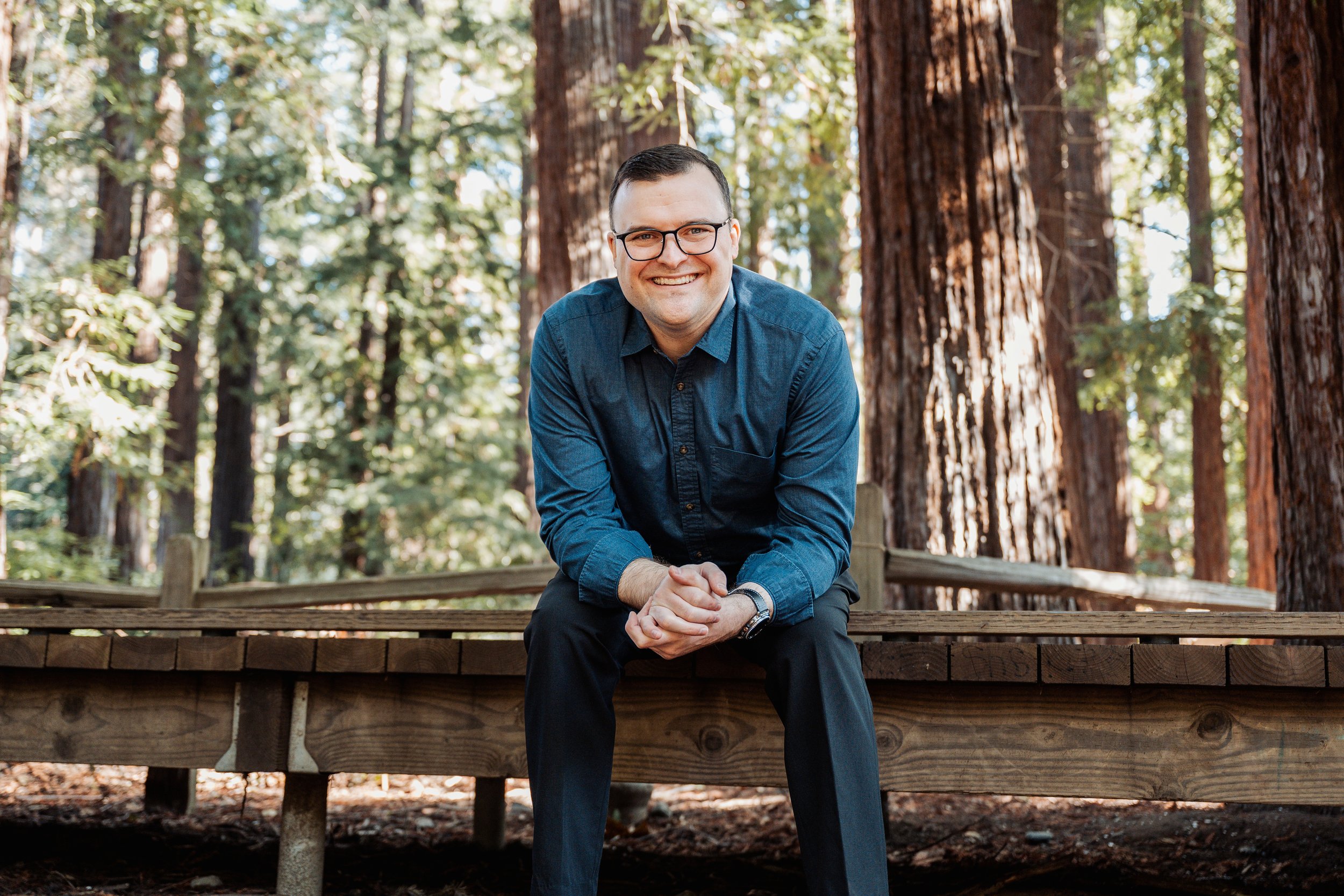
Ryan Thurwachter, LCSW, New Jersey Therapist Specializing in Internal Family Systems
I'm Ryan Thurwachter, LCSW, and I work with professionals in New Jersey via telehealth. I use Internal Family Systems therapy because it works at the level where this lives. Rather than trying to manage or override the parts of you driving all of this, IFS works with them directly. Clients tell me they finally make sense to themselves, and that the inner critic gets noticeably quieter without them having to fight it.
What Brings Most People Here
Anxiety
For years the anxiety has been what drives the performance rather than what stops it, which is why it feels impossible to separate yourself from it. The perfectionism sets a standard nothing can fully meet, and the hypervigilance doesn't turn off when you close the laptop. When this starts costing you things that matter, it's worth addressing at the source. Learn more about anxiety therapy.
Trauma
Most of the professionals I work with don't identify their history as traumatic. They describe an atmosphere, a set of rules that got installed early about what made them valuable and what it cost to need something, and those rules are still doing exactly what they were built to do. Learn more about trauma therapy.
Burnout
When the exhaustion has gone past the point where rest fixes it, when the things that used to matter have gone flat and you're going through the motions with nothing behind it, something else is driving it. The parts of you that have been driving the performance don't take days off. Learn more about burnout therapy.
Grief
Whether the loss is recent or something you've been working around for years because there was never a good time to deal with it properly, grief that doesn't move on its own usually needs more than time and conversation. I have specialized training in prolonged grief treatment through the Columbia Center for Prolonged Grief, and I use IFS alongside that work to understand the parts that are still holding the loss. Learn more about grief therapy.
Practical Information
I see New Jersey clients exclusively via telehealth, over a secure video platform. Sessions are $250. I don't bill insurance directly, but if you have a PPO plan, your out-of-network benefits will likely cover a meaningful portion of that fee. You can check your specific reimbursement estimate on the fees page before we've even spoken. If we decide to work together, I handle the claims process for you.
If you've been meaning to do something about this for longer than you're comfortable admitting, book a free consultation. It's fifteen minutes by phone, no charge, and a direct conversation about what's going on and whether this makes sense.
Currently accepting new individual clients.
You can also reach out by calling 669-577-6800 or by email here.
Your inquiry is confidential. I typically respond within one business day.
Frequently Asked Questions
-
Internal Family Systems therapy works with the mind as a collection of distinct parts, each with its own perspective and history. An IFS therapist helps you identify these parts and develop a relationship with them rather than trying to override or argue with them. In a session, that often means slowing down a familiar pattern long enough to notice which part is driving it, then getting curious about what that part is trying to do and what it's been carrying. Over time, the parts that have been working hardest get to trust that they don't have to hold everything alone, and what has been underneath them can begin to come forward.
This is different from approaches that focus on changing thoughts or building coping skills. IFS doesn't ask you to fight the inner critic or push past the anxiety. It works directly with the parts running those patterns, which is why the change tends to hold once it arrives. Where CBT teaches techniques to manage symptoms and traditional talk therapy stays at the level of insight, IFS reaches the parts of you that have been keeping the patterns in place. Learn more about how IFS therapy works.
-
IFS tends to land for people who have already done therapy and found that understanding the problem didn't change it. You can explain your anxiety in detail and trace exactly where it started, and it still runs your week.
The clients I work with are usually professionals whose coping reads as competence from the outside. It's the person who takes on the extra project because that's faster than explaining it to anyone else, and who runs the meeting well and lies awake afterward. They come in for perfectionism, an inner critic that doesn't let up, anxiety that looks like diligence, burnout a long weekend doesn't touch, or a trauma history that never looked like trauma because nothing obviously terrible happened.
It's a weaker fit if you're in acute crisis and need stabilization first, or if you want structured skills for a single specific phobia. CBT often does that better and I'll tell you if I think that's the call.
I'm licensed in New Jersey and see clients across the state by video.
-
The first step is a fifteen-minute consultation, free, by phone or video. We talk about what's going on, what you've already tried, and whether IFS makes sense for what you're carrying. There's no preparation required and no expectation that you'll know how to describe any of it cleanly. Most people who book one have been thinking about therapy for months before they reached out. The consultation isn't a sales call. It's a direct conversation about whether this is the right fit, and either of us can say so honestly at the end. If the fit is right, we'll schedule a first session, typically weekly to start, and the work begins from there. [Book a free consultation.]
-
Often yes, and most of the professionals I work with do. Quitting can feel like the only option when burnout has gone past the point where rest fixes it, but the job is rarely the whole problem. Underneath most cases of burnout is a set of internal rules about what makes you valuable and what it costs to need something. Those rules get installed early, and they're what make it so hard to slow down, delegate, or stop performing even when your body is telling you it's done. The work is to address those rules directly. When that shifts, the job often becomes manageable in a way it wasn't before, and you're in a better position to decide whether to stay or go from a place that isn't pure exhaustion.Learn more about burnout therapy.
-
The right kind of therapy can, and IFS is well suited to it. Burnout in high-functioning professionals isn't usually about working too many hours in isolation. It's driven by parts of you that have been pushing the performance for years without rest, often because they believe something bad happens if they stop. Standard advice about better sleep and protected time off doesn't reach those parts, which is why it tends not to work. IFS works directly with what's driving the burnout, and the change holds because the parts running the pattern have actually shifted rather than been overridden by willpower.Learn more about burnout therapy.
-
Most clients notice something shifting within the first six to ten sessions. Often it's small at first, a moment where you would have spiraled and didn't, or a conversation you got through without freezing up the way you usually do. One client described the early shift as being able to feel the impulse and not act on it, where before there was no gap between the two. The deeper work, the patterns that have been running for decades, tends to take longer, anywhere from six months to a couple of years depending on what you're working with and how layered it is. There's no fixed timeline. What clients often say is that the work feels different from previous therapy almost immediately, even when the bigger changes take time to land. Learn more about how IFS works.
-
The parts of you that have been driving the performance are still doing their job, and they don't take days off when you do. Vacations help temporarily, but the patterns underneath them don't get worked on, so the relief evaporates within a week of being back. What keeps burnout going is the internal architecture that made the over-functioning necessary in the first place, and it often includes a part that doesn't trust anyone else to do it right and a part that's afraid of what slowing down would mean. Until those parts get worked with directly, the burnout will rebuild every time you push through it. Learn more about burnout therapy.
-
Yes, I work with many clients in New Jersey and California virtually. IFS works well over video because the work is internal. We're not relying on physical interventions or in-person exercises. What matters is whether you can settle enough in your own space to do the work, and most people find that being in their own environment actually helps rather than hinders. Sessions happen over a secure HIPAA-compliant platform. The depth of what's possible online is the same as in-person.
-
The descriptions clients give are usually concrete and personal. One client described having "feelings of freedom from those weights" and waking up not feeling like a terrible person anymore. Another said the tightness in the body was still there but no longer carried around all day, only when something tense was actually happening. Several have described being able to talk themselves off the edge of an anxiety spike in a much shorter time, and not spiraling into depression the way they used to.
The unexpected changes are often what clients name first. One described being their own best friend now, when before they were their own harshest critic. Another said that for the first time, they made sense to themselves and understood why they were a certain way, which gave them a sense of autonomy they hadn't had before. A client about a year into the work said they hadn't had a depressive episode in nearly that whole stretch and didn't hate themselves anymore.
If any of this sounds like the kind of change you've been looking for, book a free consultation.
-
Multiple peer-reviewed meta-analyses have found that telehealth therapy produces outcomes comparable to in-person work for most clinical issues, including anxiety, depression, trauma, and grief. A 2023 systematic review in JMIR Mental Health covering twenty randomized controlled trials found equivalent results across treatment efficacy, patient satisfaction, working alliance, and attrition rates. A broader 2024 review reached similar conclusions across a wider range of clinical areas. What matters more than the format is the fit between therapist and client and the suitability of the approach for what you're working with. For New Jersey professionals, online therapy also removes a real logistical obstacle, because getting to a physical office at a specific time on a weekday is often what makes therapy fall apart before it gets anywhere. Working from your own space, in a window of time that actually fits your week, makes consistent attendance much more likely, and consistency is what makes therapy work.
In-Person and Virtual Therapy
In-person sessions in Menlo Park, minutes from Palo Alto. Virtual sessions throughout California and New Jersey.
Menlo Park Office
120B Santa Margarita Ave Suite 211
Menlo Park, CA 94025, United States
Ryan Thurwachter, LCSW | MSW, San Jose State University | BA, UC Santa Cruz | CA License #100577 | NJ License #44SC06030200
This page is written by Ryan Thurwachter, LCSW, based on five years of clinical practice. It is not a substitute for diagnosis or treatment. If you are in crisis, please contact 988.
Also find Ryan at Psychology Today, IFS Institute, Zencare, and TherapyDen.
Content reviewed by Ryan Thurwachter, LCSW — August 2026
